
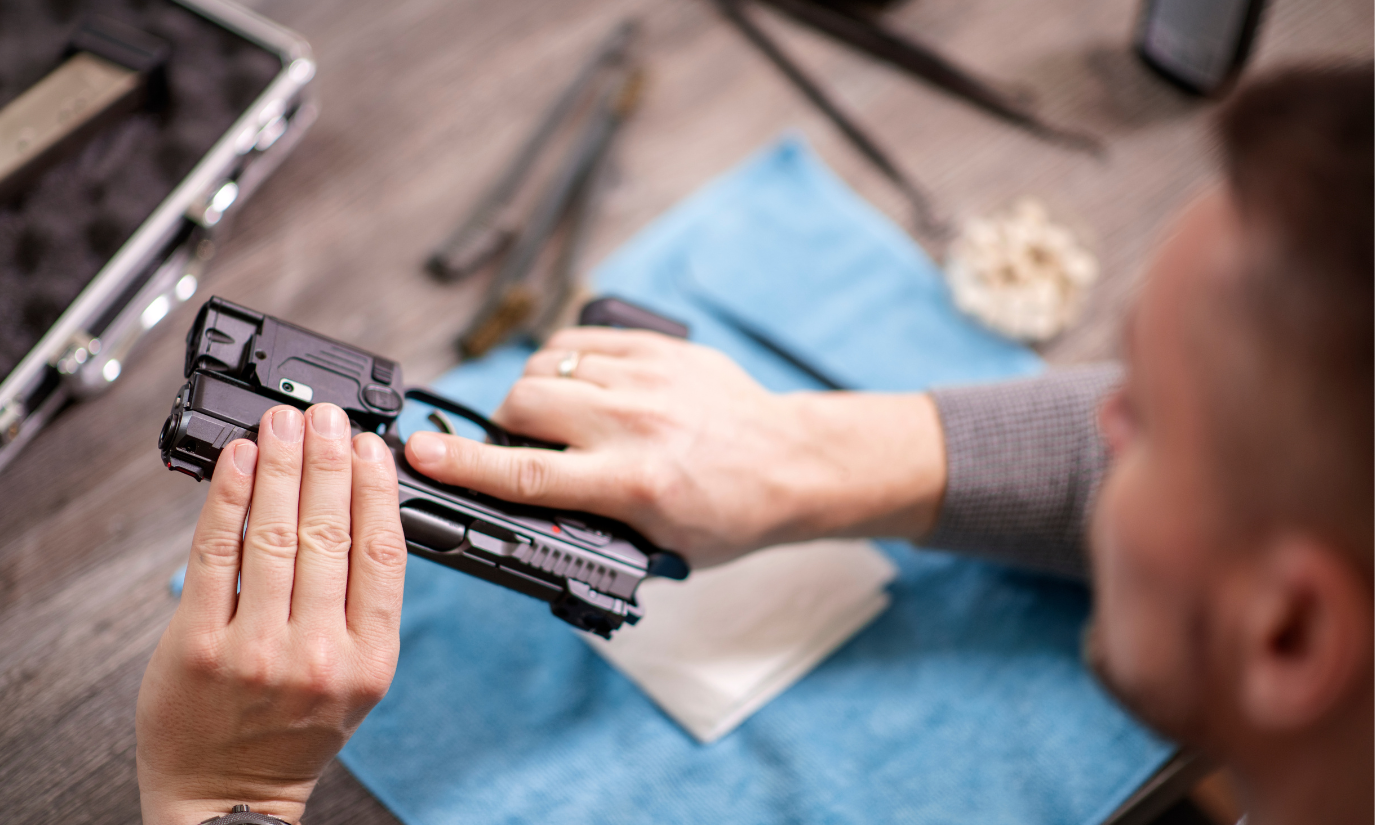
How to Maintain Your Firearm for Reliability & Safety
Safety & legal note: This article is educational and not legal advice. Firearm laws (including storage/transport) and manufacturer procedures vary. Always follow your owner’s manual and verify current local laws before working on or storing a firearm.
Well-maintained guns run more reliably, last longer, and are safer to handle. Use this clear, repeatable routine to keep your pistol, rifle, or shotgun in top shape—without over-cleaning or skipping the steps that matter.
1) Before you begin: the safety routine
- Unload, then confirm again. Remove the magazine, lock the action open, and physically/visually inspect the chamber, magwell, and bolt face. No ammo on the bench.
- Work in a safe direction with good lighting and ventilation.
- Use the manual. Field-strip only to the level the manufacturer intends. Avoid “detail stripping” unless trained.
2) A simple maintenance schedule
- After each live-fire session
- Wipe & lube: Quick exterior wipe-down, clean/lube critical points (below).
- Bore care: Pass a bore snake or a few patches if you shot a lot, corrosive ammo, or dirty powders.
- Every ~500–1,000 rounds (or quarterly if you shoot rarely)
- Field clean: Barrel, chamber, bolt/slide, feed ramp, gas parts (as manual permits), magazines.
- Annually (or every heavy season)
- Deeper service: Replace wear parts per the manual (springs, gas rings, extractor springs), refresh optic battery, confirm all fastener torque, inspect magazines.
Tip: Let round count and environment guide you. High round counts, suppressed shooting, short-barrel gas systems, and dirty ammo shorten intervals; .22 LR and shotguns often need more frequent cleaning.
3) Your essentials kit (keep it simple)
- Cleaning: one-piece coated rod (or bore snake), caliber-correct jags/brushes, patches, nylon brush, cotton swabs/pipe cleaners, dental pick/nylon scraper, chamber brush as needed.
- Chemistry: quality solvent (carbon/copper as appropriate), gun oil, and (optionally) a light gun grease for high-load sliding rails. CLP works in a pinch; dedicated products usually perform better.
- Setup: nitrile gloves, rags, small tray, inch-pound torque driver for optics/mounts, a drop of blue threadlocker(not red) for screws that the manual approves.
4) Field-strip & clean: step-by-step (universal pattern)
- Barrel & chamber
- Clean from chamber to muzzle when possible (protect the crown).
- Wet patch with solvent → wait 3–5 min → brush (if copper/lead fouling) → dry patches to clean → light oil patch to protect (wipe dry before storage in case of oil migration).
- Bolt/slide & action
- Wipe carbon, scrub nooks with nylon brush, use solvent sparingly.
- Feed ramp & breech face: clean until shiny—these drive reliable feeding/ignition.
- Frame/receiver
- Remove grit from rails, locking lugs, and trigger group areas (no soaking).
- Gas systems (ARs/semis)
- Follow the manual. Don’t scrape coatings off pistons/gas plugs. Keep ports unobstructed.
- Choke tubes (shotguns)
- Remove, clean threads/mating surfaces, lightly oil, and re-install to proper torque so they don’t seize.
5) Where—and how much—to lube
Think “a drop where parts rub,” not “soaked.”
- Pistols (striker-fired):
- A thin film on slide rails, barrel exterior, locking surfaces, and a dot on connector/trigger bar if the manual allows.
- Grease can be used on rails if recommended; oil on pivots.
- AR-pattern rifles:
- Oil the bolt carrier rails, cam pin, bolt lugs, gas rings, and a film on the charging handle. A wet BCG generally runs more reliably.
- Shotguns:
- Oil action bars, bolt rails, and hinge/locking surfaces (break-actions). Keep the chamber and magazine tube free of heavy oil.
Over-lubing risks: oil migration into primers, gummed-up magazines, and attracting grit. If it looks wet and stays wet after cycling by hand a few times, it’s enough.
6) Magazine maintenance (huge for reliability)
- Disassemble (per manual), brush out powder flakes and debris.
- No oil inside—oil traps dirt. Wipe dry.
- Inspect feed lips & followers for cracks or burrs; replace weak springs.
- Number your mags with a paint pen so you can quarantine any problem magazine immediately.
7) Optics, screws, and zero
- Use an inch-pound torque driver and manufacturer torque values (e.g., many micro-dots specify ~10–18 in-lb for top screws; confirm your model).
- Apply blue threadlocker sparingly to clean, degreased threads if the manual permits.
- Confirm zero after any mount or screw work, or after a hard impact.
- Replace optic batteries on a schedule (e.g., annually on your birthday) and note the date.
8) Storage that preserves metal—and complies with law
- Dry, locked, and consistent: a proper safe or lockable cabinet; add desiccant or a dehumidifier rod if humidity is an issue.
- Light oil wipe on exterior metal before storage; avoid leaving fingerprints on blued steel.
- Muzzle devices & suppressor hosts: a touch of anti-seize on threads if specified by the maker.
- Follow local storage laws (locks, containers, and access) and your manufacturer’s instructions.
9) Post-maintenance function checks
After reassembly—unloaded and pointed in a safe direction:
- Pistols: rack slide, check slide lock on empty mag, trigger press and reset (with proper dry-fire procedures), safety/decocker operation.
- AR-pattern rifles: charge, verify safety blocks the trigger, check reset, confirm bolt catch holds on an empty mag.
- Shotguns: cycle the action, verify safety, check carrier/lifter function, and magazine cutoff (if present).
If anything feels gritty, slow, or inconsistent, stop and re-inspect.
10) Proving reliability (live fire)
Any time you change lube, parts, or mounts:
- Fire a short confirmation string (e.g., 30–50 rounds) with your usual ammo.
- Verify feeding, lock-back on empty, ejection pattern, and accuracy/zero.
- If you rely on a specific defensive load, run a box of it to confirm function in your gun and your magazines.
11) What not to do
- Do not pry or polish engagement surfaces “to make it smoother” unless you’re qualified.
- Do not flood triggers, firing pin channels, or gas systems with oil.
- Do not mix threadlockers or use permanent (red) products on firearm screws unless the manufacturer says so.
- Do not exceed the disassembly level your manual covers.
12) Keep a simple maintenance log
Track date, round count, parts replaced, torque values (if used), zero confirmation, and any malfunctions. Patterns in your log tell you when springs or magazines need attention—before failures show up in class or competition.
Quick checklist (save/share)
- Unload → verify → no ammo on bench.
- Clean: bore, chamber, bolt/slide, feed ramp, magazines.
- Lube: thin film on contact points; keep chambers & mags dry.
- Torque & threadlocker: manufacturer specs only; re-confirm zero.
- Store: dry, locked, humidity-controlled; light oil wipe.
- Function check → short live-fire confirmation after changes.
Final reminder: Manufacturers publish platform-specific procedures, lube points, replacement intervals, and torque specs. Follow your owner’s manual first, adapt intervals to your environment and round count, and verify local storage/transport laws regularly as they can change.
Related Posts